Attic Ventilation in Toronto, ON
We look at how air moves through your attic and fix whatever is stopping it from staying cold and dry in winter.
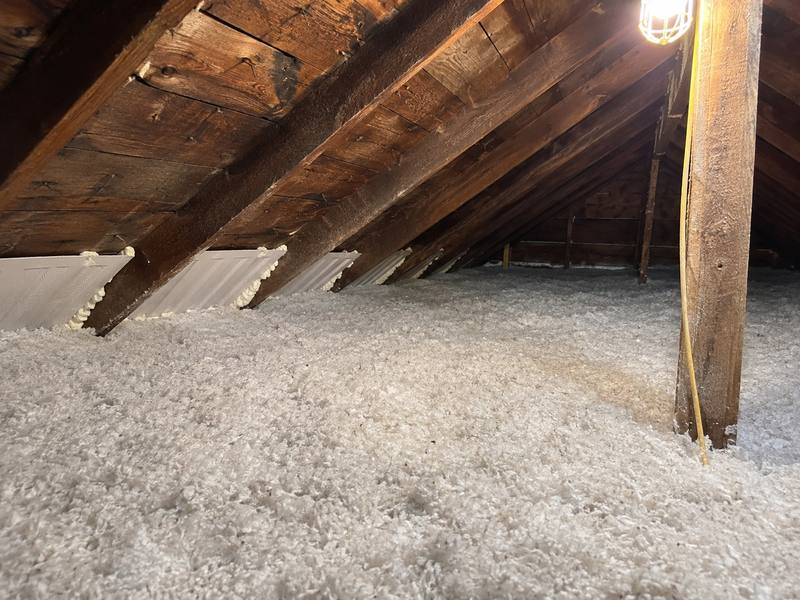
Attic ventilation in Toronto works on a simple rule: air comes in low at the soffits and goes out high at the roof vents, which keeps the attic cold and dry in winter. That flow breaks down when attic insulation gets packed into the soffits or when warm house air leaks up through the ceiling. First you get frost on the roof boards and damp insulation. Later you get ice dams at the eaves. We work out which of those is going on in your house and fix the cause before we add anything new.
How attic ventilation works
Attic ventilation moves outdoor air through the space above your ceiling, and that air carries heat and moisture away. It comes in through the soffit vents under the eaves, rises along the underside of the roof deck and leaves through roof vents or a ridge vent at the peak. Warm air rises on its own and wind over the roof helps pull it out, so you don't need a fan.
In winter, a healthy attic is close to the temperature outside. A cold attic is what you want. The insulation on the attic floor keeps your heat down in the house. The air moving above it keeps the roof boards cold, so snow on the roof doesn't melt from underneath.
Attic baffles keep the soffits open
Attic baffles, also called rafter vents, are foam or cardboard channels stapled to the roof deck between the rafters at the eaves. They hold the insulation back from the soffit vents so outside air has a clear way up into the attic.
Without them, blown-in insulation drifts into the eaves and plugs the soffits. The attic loses its intake and the moisture has nowhere to go. You usually see it first as frost on the roof boards near the edge.
Before a top-up, our crew puts baffles in every rafter bay that has a working soffit vent. It's quick while the eaves are easy to reach and a lot harder once deep insulation is down. If a soffit has no vent at all, we'll tell you and talk through adding intake. A baffle that leads to a solid soffit doesn't do anything.
Signs of poor attic ventilation
Most ventilation problems show up in winter, when warm, damp air from the house hits cold roof boards.
Frost on the underside of the roof boards
White frost on the nail tips and the underside of the roof sheathing means damp air is getting into the attic faster than the vents can clear it. On a mild day the frost melts and drips onto the insulation, and people often take it for a roof leak.
Damp or stained insulation
If the insulation feels damp, looks matted or has brown water stains, condensation has been dripping on it from above. Wet fibreglass and cellulose lose a lot of their insulating value, and the damp wood around them is where mould gets started.
Ice dams at the eaves
Ice dams form when a warm roof deck melts the snow and the water freezes again at the cold eaves. The main cause is heat leaking into the attic. Blocked soffits make it worse. Water can then back up under the shingles and stain the ceiling or wall below.
A hot, stuffy attic in summer
If your attic feels like an oven on a summer afternoon, it's short on intake, exhaust or both. That heat comes down into the upstairs bedrooms, and it wears out the shingles sooner.
Bathroom fans and kitchen ducts that vent into the attic
A bathroom fan that blows into the attic is a common cause of wet insulation and mould. Every shower pushes warm, wet air up the fan. If the duct ends loose in the insulation or points at a soffit, that moisture ends up on the roof boards.
Bathroom fan ducts and kitchen exhaust ducts have to go all the way outside through a proper roof or wall cap. We look for ducts that have come apart, ducts that stop short in the attic, and flexible duct that sags and collects water. We also insulate the duct where it runs through the attic so condensation doesn't form inside it.
If we find mould on the roof boards, we stop there and recommend a mould remediation firm, because that isn't work we do. Once they've finished, we replace the wet insulation and clear the soffit intake so the moisture problem doesn't come back.
Ventilation and air sealing work together
Ventilation clears out moisture that reaches the attic, and air sealing keeps it from getting up there at all. Most of it rides up on warm house air through gaps around pot lights, plumbing stacks, wiring holes, the attic hatch and the tops of interior walls.
If the ceiling leaks badly, adding exhaust can make things worse, because the extra pull draws even more warm air out of the house. So we do the air sealing on the attic floor before any blown-in insulation goes down. With the ceiling sealed, the vents only have to handle the little bit of moisture that still gets through.
A winter check you can do from the attic hatch
Wait for a cold Toronto morning after a few days below freezing, grab a flashlight and look in from the hatch. Don't climb in. Stepping on insulation squashes it, and older attics often have no floor to stand on.
- Shine the light on the underside of the roof boards and the nail tips. Frost or rusty nails mean damp air is getting in.
- Look toward the eaves. Packed insulation where the rafters meet the wall, with no baffles, usually means the soffit vents are blocked.
- Check the top of the insulation for dark streaks, crusty patches or matted spots where condensation has dripped.
- Find the bathroom fan housing and follow the duct. It should leave the attic through the roof or a wall. It shouldn't just end in the insulation.
- Look at the hatch. Frost or staining around the edges means warm air is getting past it.
- If the insulation is loose, grey-brown and pebbly, don't touch it. It may be vermiculite: we stop and recommend you have it tested by a qualified lab or abatement firm before any work goes ahead.
Ventilation problems to fix before adding insulation
If you lay new insulation over a moisture problem, it gets wet and stops doing its job. Deal with these first:
- Bathroom fan or kitchen ducts that empty into the attic: run them outside.
- Soffit vents that are blocked, painted shut or buried: clear them and put in baffles.
- Air leaks in the ceiling around the hatch, pot lights and plumbing stacks: seal them.
- Ridge vents and roof vents mixed on the same roof, or a powered fan next to passive vents: these can short-circuit and pull air from the closest vent instead of the soffits.
- Wet or mouldy roof boards: have a remediation firm take care of the mould, and let the wood dry out before anything goes in.
FAQ
Common questions about attic ventilation
Yes, the baffles go in first. Once blown-in insulation is down, the eaves are buried and there's no clean way to get them in. They hold the insulation back from the soffit vents so air can still come in at the edge of the roof. We put one in each rafter bay that has a working soffit vent before the top-up starts.
Yes. An attic can have more exhaust than its intake can supply, and that causes trouble. Extra roof vents over blocked soffits end up pulling warm air out of the house through ceiling leaks when they should be drawing outside air in through the eaves. Balanced intake and exhaust over a sealed ceiling matters more than how many vents you have.
Frost in the attic means warm, damp air from the house is reaching the cold roof boards and freezing on them. It usually comes from ceiling air leaks and bathroom fans that vent into the attic. Blocked soffits add to it, because fresh air can't come in and flush the moisture out. We seal the ceiling leaks first. A fan duct that ends in the attic is a job for whoever installs bathroom fans. Then we open up the intake.
No. Soffit vents buried in insulation let little or no air into the attic. The roof vents then have nothing to pull from, so moisture hangs around and the eaves stay warm enough to cause ice dams. Pulling the insulation back and putting in baffles gets the intake working again.
Usually not, at least not first. Ice dams come mostly from heat leaking into the attic, and adding vents doesn't fix that. Sealing the ceiling and keeping the soffits open does more to keep the roof deck cold. We check both of those before we suggest any new vents.

Next step
Book an attic insulation inspection in Toronto
Call us, or send the form with your address and whatever you've noticed upstairs. We'll look at the attic, tell you which of the four outcomes fits, and put the work in a written quote.