Attic Insulation in Summerhill, ON
Air sealing, blown-in top-ups and removal of damaged insulation for Summerhill attics, small ones with low hatches included.
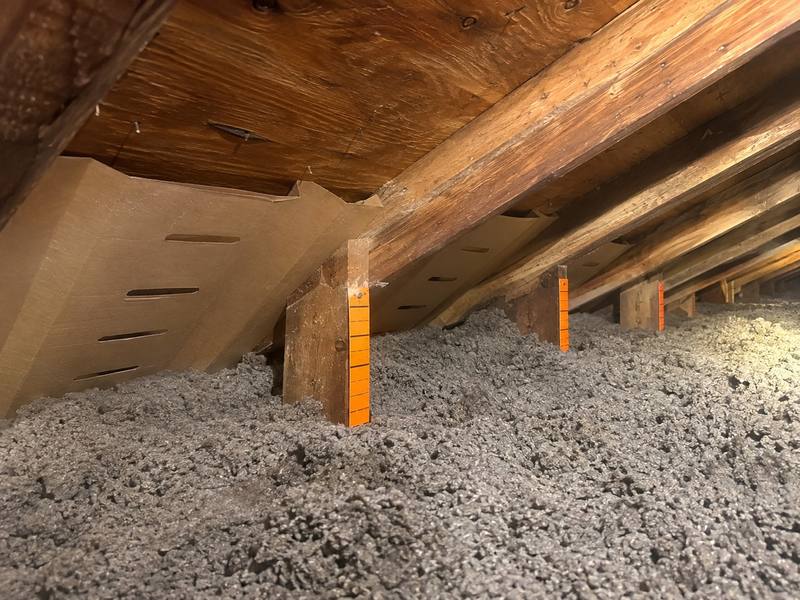
We do attic insulation in Summerhill, the neighbourhood that grew up along Yonge Street. Summerhill is about 3 km from us. We look in the attic before we quote anything and tell you what it needs. Sometimes that's a lot less than a full job.
Summerhill grew up around the railway on Yonge Street
Summerhill built up quickly around a railway station that opened on Yonge Street in the 1880s. The 1916 station building is still there. It's an LCBO now.
Houses on streets that old have often had more than one owner working in the attic. In an older attic the insulation can be thin, settled or patchy. Stored boxes flatten one area, or somebody topped up one corner and left bare joists in another. Air leaks build up too, around ceiling light fixtures and wherever later electricians and plumbers drilled through the top plates.
So our attic insulation work begins with a look in the attic, not a quote for a set depth. A dry, clean old layer can usually stay where it is and get topped up. If it's wet or damaged, or it turns out to be vermiculite, the plan is different. The sections below cover both.
Small attics and low hatches
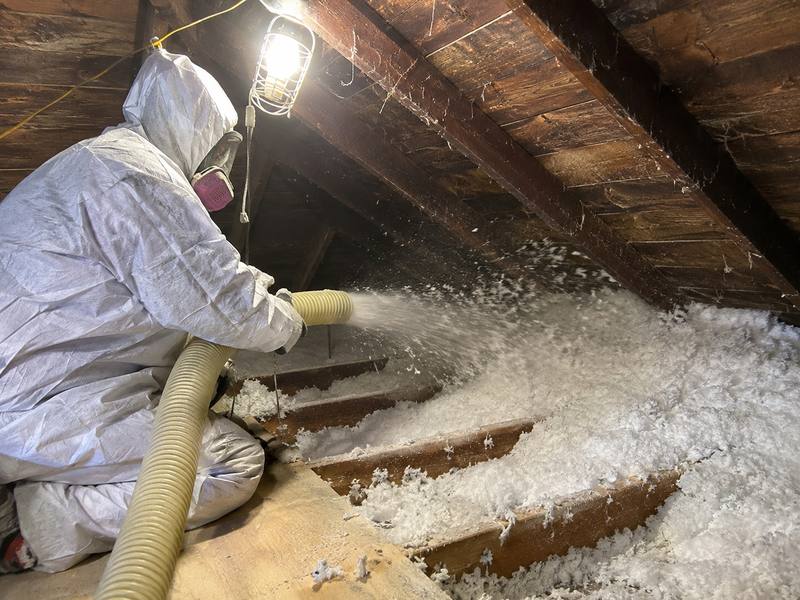
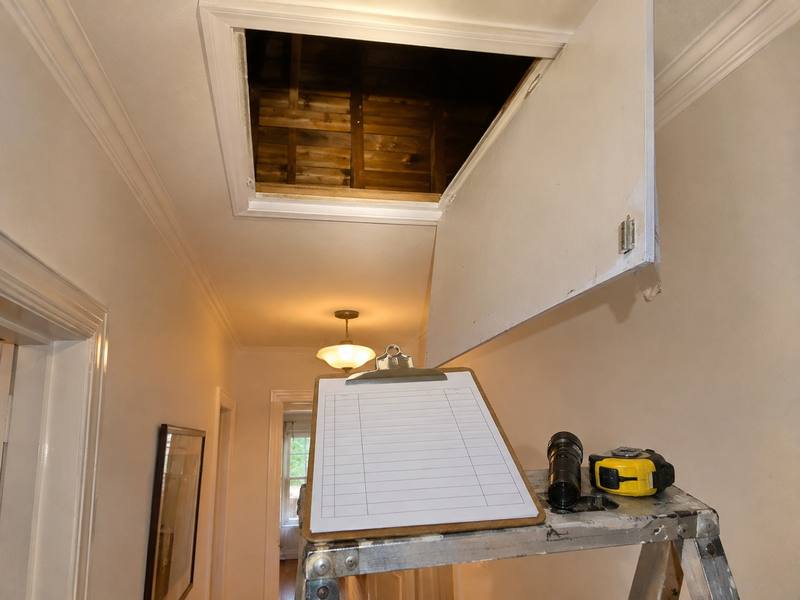
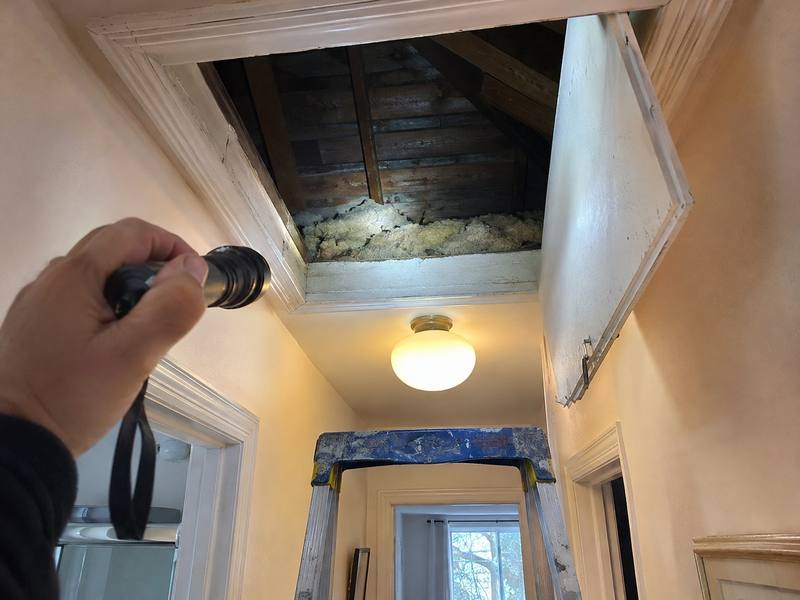
A small attic or a low, narrow hatch still leaves room for a top-up. Blown-in insulation comes through a hose from a machine parked outside, so the only things that need to fit through the opening are the hose and one installer.
Air sealing from a cramped attic floor
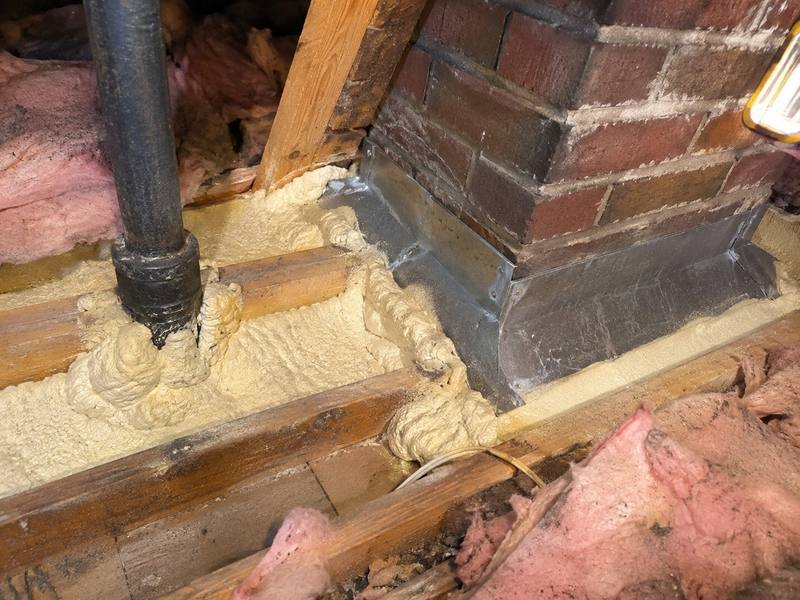
When the space above the ceiling is tight, we still do air sealing by hand, one leak at a time. At each opening we pull the old insulation back, seal around the light fixture or plumbing stack with spray foam or caulk, then put the insulation back over it. The hatch gets weatherstripping and a rigid insulated panel on the back. If the hatch isn't sealed, warm air goes straight up into the attic.
Blowing a top-up into a shallow space
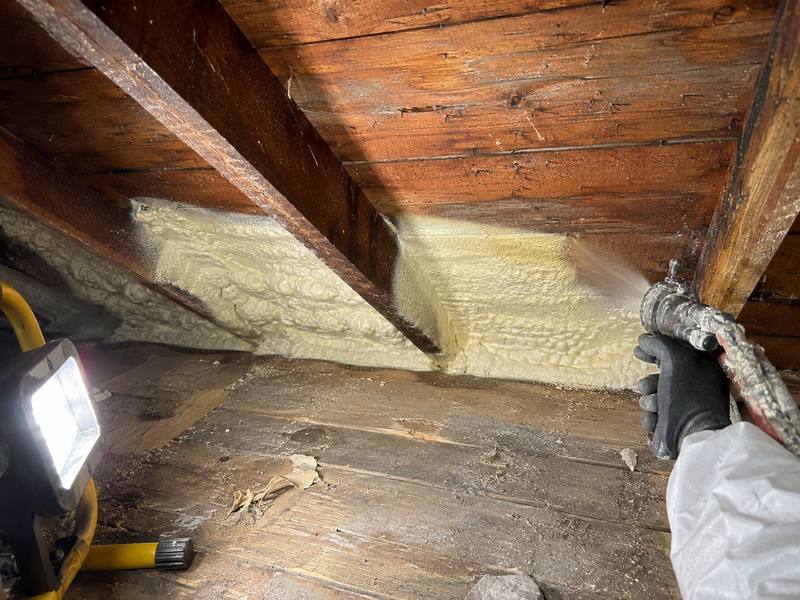
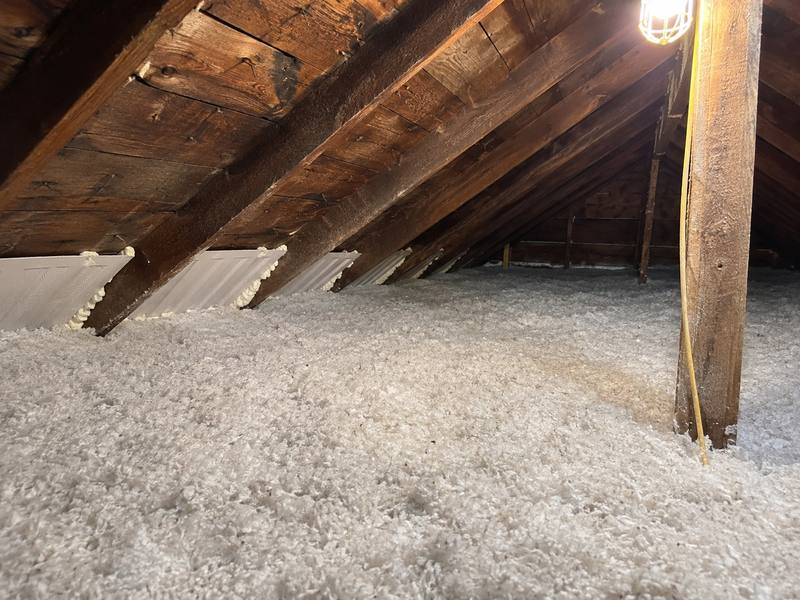
Even a shallow attic can get an even depth of blown-in insulation, because the installer points the hose at the far corners and doesn't have to crawl into them. The loose-fill cellulose or fibreglass settles between the ceiling joists and over them. Before any of it goes in, we put baffles at the eaves so the new layer can't slide down and block the soffit vents. Where part of the attic is too tight for loose fill to reach full depth, we'd use spray foam in that spot.
When a small attic needs removal first
If the insulation is wet, mouldy or damaged by rodents, it has to come out before anything new goes in, however small the attic is. Wet fill has lost much of its insulating value, and it holds moisture against the ceiling underneath. Where mice or squirrels have nested, the insulation is full of droppings and urine. Putting new fill on top just covers that up.
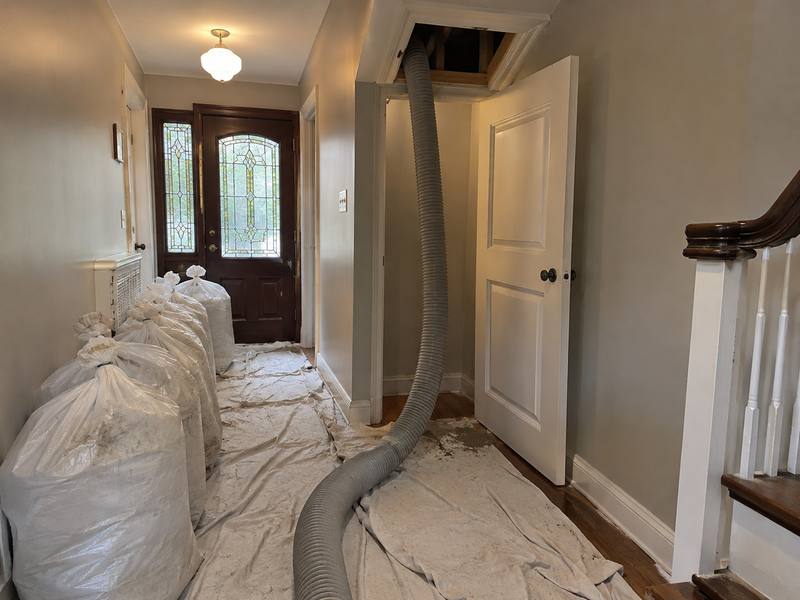
Attic insulation removal works the same in a tight space as in a big one. A high-powered vacuum pulls the loose fill down a hose into bags outside, so none of it gets carried through your house. With the attic floor bare, the air leaks are easy to find and seal, and the new layer goes down on a clean surface.
Vermiculite is a grey-brown, pebbly fill. If we find it, we stop and leave it alone, and we recommend having it tested by a qualified lab or abatement firm before any work goes ahead. You don't need a building permit to replace insulation in Summerhill. Adding or replacing insulation is on the city's list of work that doesn't need one, but zoning rules still apply.
Nearby: Rosedale, Moore Park and Davisville
We check first in the neighbourhoods next to Summerhill as well. We do attic insulation in Rosedale, Moore Park and Davisville, and each of those pages talks about the houses and streets in that area.
Local details for Summerhill
- Postal codes: M4V
- Distance: About 3 km away in a straight line
- Permit rules: toronto.ca
- Nearby: Rosedale, Moore Park, Davisville
About Summerhill: Summerhill, ON on Wikipedia · Summerhill on Google Maps
FAQ
Insulation questions from Summerhill
Yes, if one installer and a hose can get through the opening. The machine feeding the blown-in insulation stays outside, so nothing bulky has to go through the hatch. If the hatch is too small even for that, it can sometimes be widened between the ceiling joists. Then we seal and insulate the new frame.
We put baffles in at the eaves before any new insulation goes down. They keep a clear channel open between the roof deck and the fill, so air from the soffit vents can keep moving up under the roof. Without them, loose fill in a shallow attic tends to drift toward the eaves and block the vents. In winter that can lead to condensation on the roof sheathing.
Yes, as long as the attic floor gets air sealed first. In a shallow space the leaks often lose more heat than a thin layer of insulation can stop. Sealing also keeps warm, damp air away from the cold underside of the roof. After that, topping up to whatever depth fits still helps, and spray foam can cover the tightest spots where loose fill won't reach full depth.

Next step
Request an insulation visit in Summerhill
Call us, or send the form with your address and whatever you've noticed upstairs. We'll look at the attic, tell you which of the four outcomes fits, and put the work in a written quote.