Honest Insulation Toronto: Attic Insulation in Toronto, ON
We check your attic first, then tell you straight what it needs.
- Serving Toronto & 13 neighbourhoods
- Open 24 hours
What we do
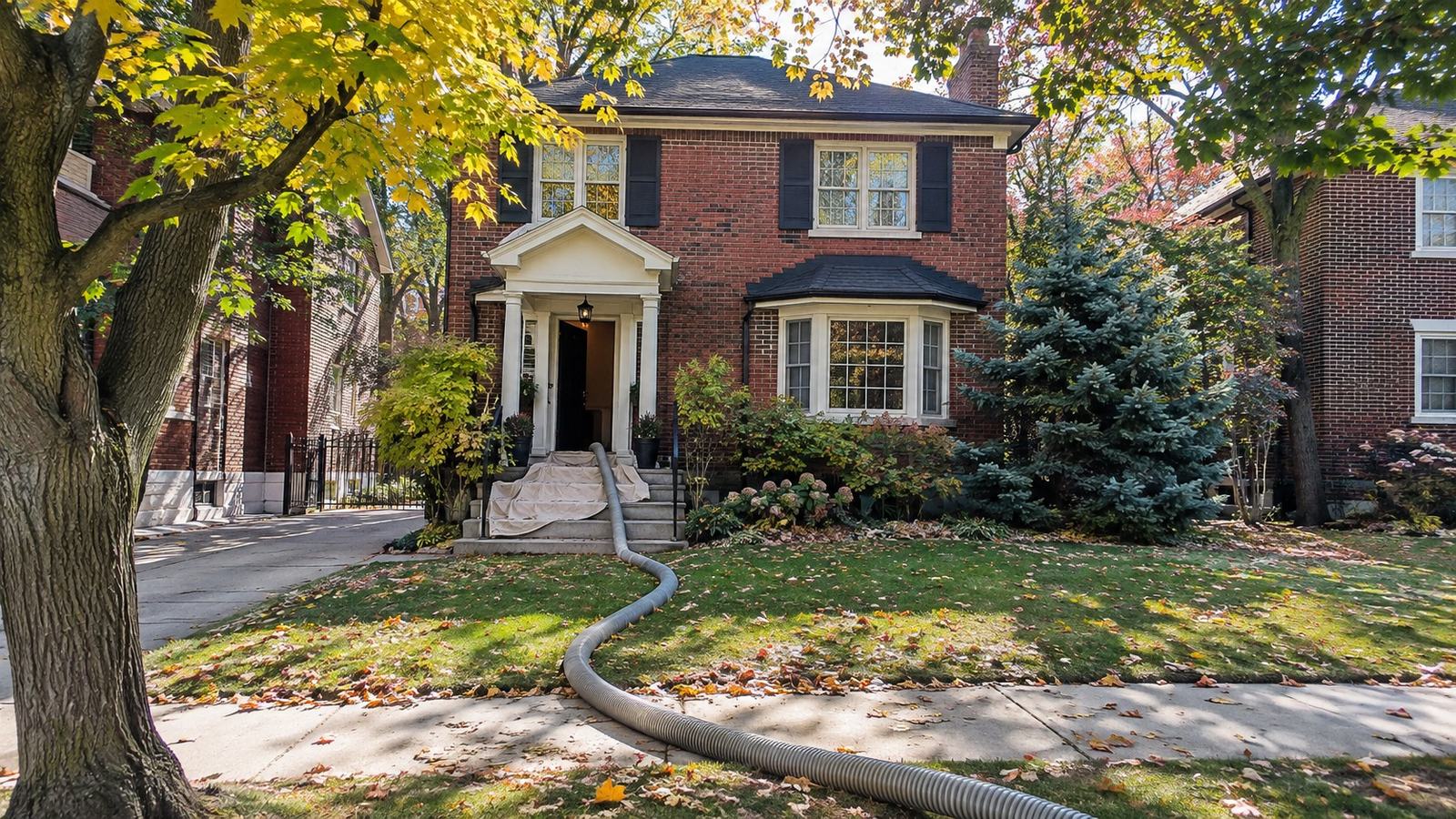
Usually that means sealing the air leaks and topping up the insulation. If the old insulation is wet or damaged, it comes out first. If your attic is already in good shape, we'll tell you that too. Honest Insulation Toronto works as attic insulation contractors across Toronto: blown-in attic insulation, attic insulation removal and spray foam, plus air sealing and attic ventilation work.
The work
A closer look at the work
About us
A Toronto insulation crew that checks the attic first
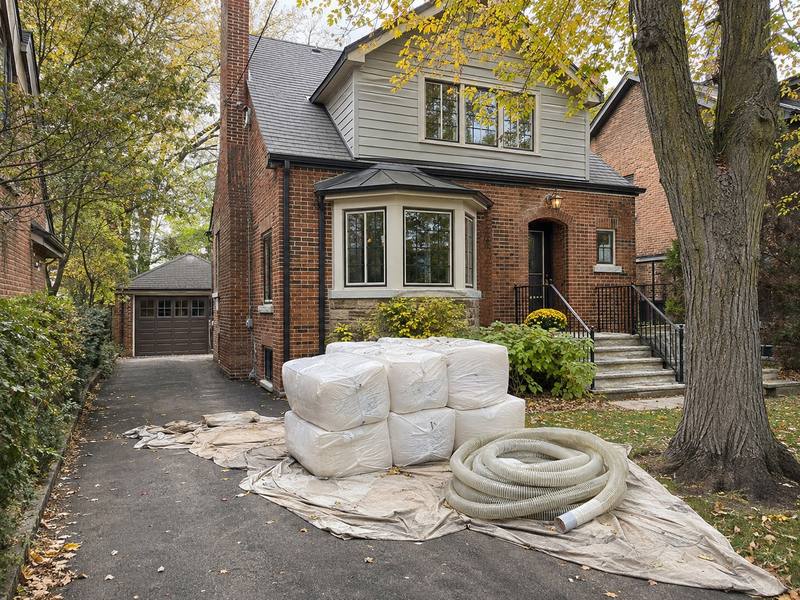
Most of our work is in the older brick homes of Leaside, Davisville, Mount Pleasant, Lawrence Park and East York. A lot of those attics just need air sealing and a top-up of blown-in insulation. They don't need a full tear-out, and when that's the case we tell you.
When a house needs more, we do attic insulation, dense-pack wall insulation through plaster, basement insulation, spray foam for tight spots, and removal of old, wet or rodent-damaged insulation. We explain what we find in plain terms. The quote only covers work that will change how the house feels and what you pay to heat it.
- We look in the attic first. Depth, moisture, ventilation and air leaks decide the right material, so we check each of them before we write anything down.
- We seal before we insulate. We close the gaps around lights, plumbing and the attic hatch first. Otherwise warm air slips past the new insulation and it can't do its job.
- We say what you need. If a top-up will do, we tell you so. If the old layer has to come out, we show you why.
What to check in a Toronto attic
Most Toronto attics need one of four things: a top-up, removal first, air sealing first, or nothing yet. We decide which one after checking how deep the insulation is now, what shape it's in, how much air is leaking up from the rooms below and whether there's any sign of moisture. Many older attics have a thin layer of old insulation that's still dry. Those usually need sealing and a top-up, and the old layer can stay.
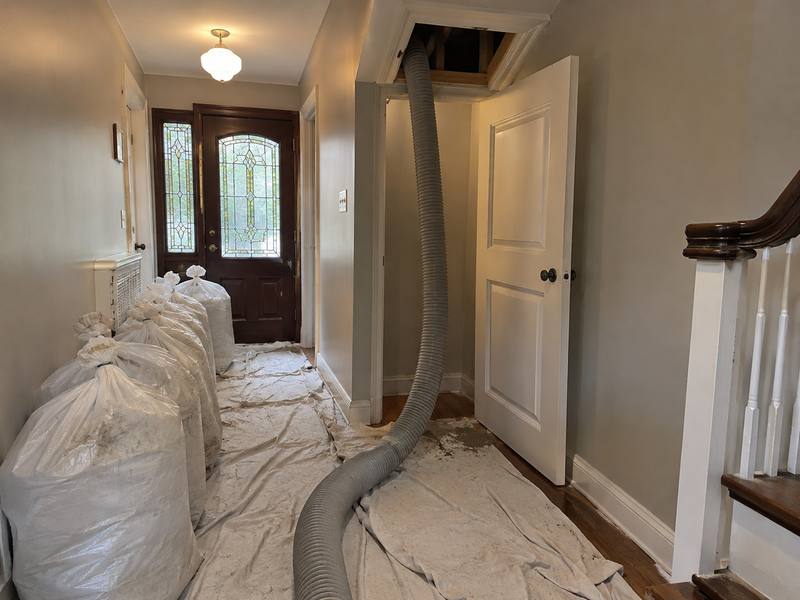
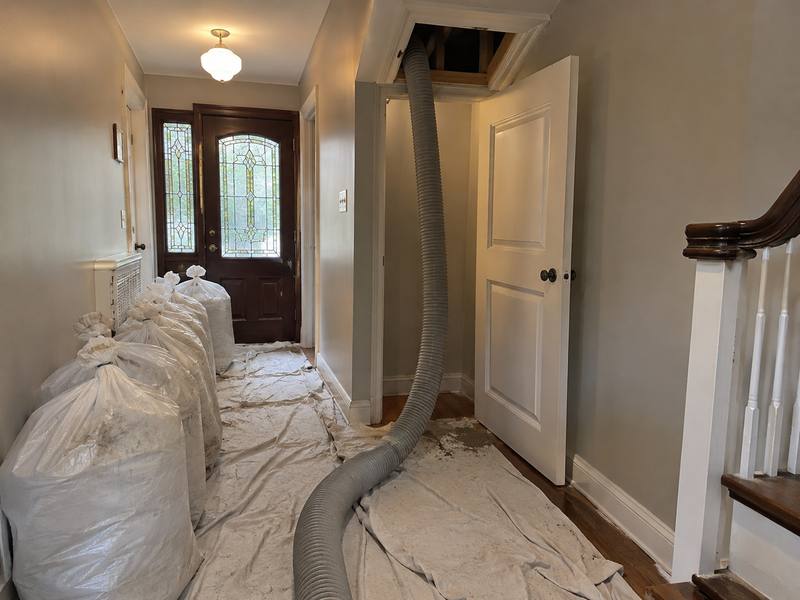
If you can't tell which of the first two applies to you, our guide on whether to top up or remove old attic insulation goes through the signs. When removal is the answer, we do attic insulation removal with an insulation vacuum. Its hose runs outside to collection bags, so the old material never gets carried through your rooms. Vermiculite is a grey-brown, pebbly fill. If we find it, we stop, leave it undisturbed, and recommend you have it tested by a qualified lab or abatement firm; removal is work for a licensed abatement firm.
- Top up: the layer that's there is dry, even and free of droppings, so the new insulation goes straight on top.
- Remove first: the old layer is wet, mouldy, flattened or full of rodent droppings, so it has to come out before anything new goes in.
- Air seal first: the depth is decent, but warm air is pouring up around lights, pipes and the hatch, so sealing will do more good than extra depth.
- Leave it for now: the attic is dry, the layer is deep and the rooms below are comfortable, so more insulation would barely touch your heating bills.
Blown-in fibreglass, cellulose, batts or spray foam
Mostly, the shape of the space decides the material. If it's an open attic floor where you can see the ceiling joists, loose blown-in insulation fits. Sloped ceilings, knee walls and shallow eaves are spray foam territory.
Blown-in fibreglass
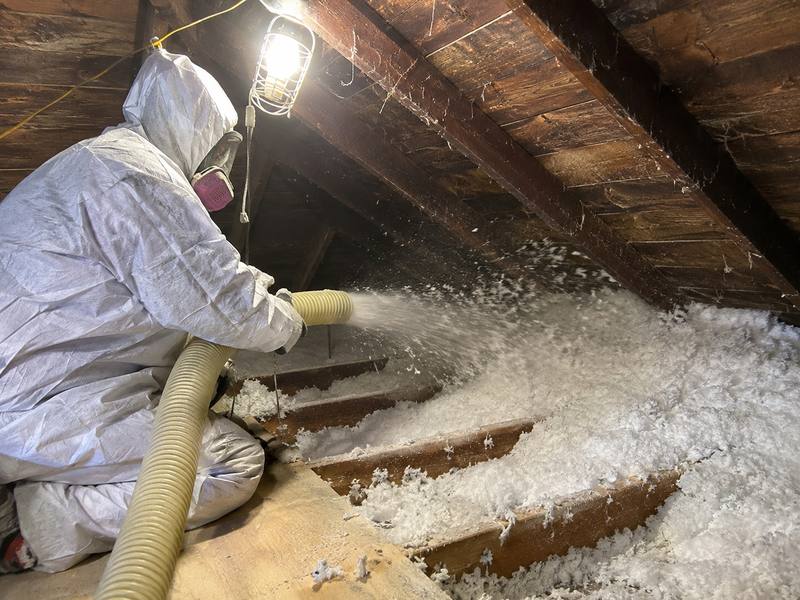
Blown-in fibreglass is loose glass fibre, blown across an open attic floor through a hose from a machine on the truck. It fills in around wiring and between joists, doesn't soak up water and barely settles. When we top up an existing layer with blown-in attic insulation, this is usually what we use.
Blown-in cellulose
Blown-in cellulose is shredded recycled paper, treated with borate so it resists fire and pests. It's denser than loose fibreglass, so air moves through it a bit more slowly. It's also heavier, and it holds water if a roof leak gets to it. We'd use it in an open attic with a sound roof and good ventilation.
Batts and mineral wool
Batts are pre-cut blankets that sit between the joists. They work best in an empty attic where the joists are evenly spaced. Mineral wool batts are denser than fibreglass ones, cut more cleanly and hold up better to fire and moisture. Fibreglass batts are lighter to carry around. Unless each batt is cut carefully, they leave gaps around wiring and blocking, so we rarely use them to top up an attic that already has insulation.
Spray foam
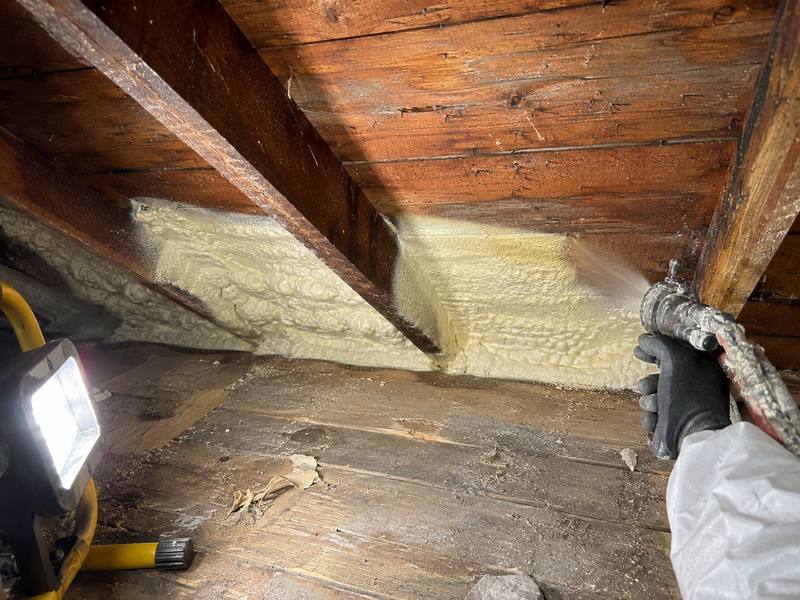
Spray foam is for the places loose fill won't stay put: sloped ceilings, knee walls, rim joists and the tight eaves of a low-pitch roof. Closed-cell foam seals air and blocks moisture in one layer. Open-cell foam is softer and suits interior cavities. Our spray foam insulation page explains where each type goes and how long the house stays empty while it cures.
How much attic insulation a Toronto house should have
For new houses in Zone 1, SB-12 sets a minimum of nominal R-60 for a ceiling with attic space in most compliance packages, and R-50 in the rest. Toronto is in Zone 1 because SB-1 puts the city at 3520 heating degree-days, which is under the 5000 cutoff for Zone 1.
For an attic that already exists, treat those numbers as a reference point, not a rule. What R-value you can actually reach depends on the space, how steep the roof is at the eaves and what's up there already. You can get a rough sense of your own depth from the hatch:
- Open the attic hatch, take a flashlight, and look across the floor from the ladder. Don't step between the joists. The ceiling under them is only plaster or drywall.
- Find the ceiling joists. They're the wooden framing the ceiling below hangs from.
- If the insulation is level with the tops of the joists or lower, the attic is well short of the reference numbers and a top-up will help.
- If you can't see the joists and the layer looks even, the depth is probably fine. Air leaks are the next thing to check.
- Look for bare patches near the hatch, thin spots along the eaves and dark streaks in the fibres. Those tell us where air is getting through.
Signs your attic insulation needs work
You'll usually notice most of these in the rooms below well before anyone goes up into the attic.
Cold or hot upstairs rooms
Bedrooms that are cold in January and stuffy in July usually point to thin insulation, air leaking into the attic, or both. Warm air escaping through gaps around light fixtures and the hatch carries heat out with it, which is why sealing often helps as much as adding depth.
Ice dams and long icicles
Ice dams form when heat from the house warms the roof deck. The snow melts, runs down, and freezes again at the cold eave. Long icicles along one stretch of roof mean heat is escaping above that spot. Often it's a leaky top plate, a bathroom fan venting into the attic, or blocked soffit vents.
Insulation level with the ceiling joists
If you can see the tops of the joists, the attic has lost most of the depth it needs. That's the clearest case for a top-up, provided the layer underneath is dry and clean.
Dark, damp or flattened insulation
Dark streaks in fibreglass are dust, filtered out of air leaking up from the house. Damp or matted insulation means a roof leak, condensation from poor ventilation, or a fan blowing into the attic. Flattened patches with droppings mean rodents. The right trade fixes the cause first, and badly damaged material usually comes out.
Air sealing and ventilation before more insulation
Air sealing comes first because insulation slows heat down but doesn't stop air moving. Warm, moist air from the house rises through leaks in the attic floor: around plumbing stacks, wiring holes, pot lights, the chimney chase and the hatch. It takes heat into the attic no matter how deep the insulation is. We close those gaps with foam, caulk and fitted covers before any new layer goes down. Our air sealing page lists the usual spots.
We put baffles in the rafter bays along the eaves so the new insulation can't spill into the soffits and block the vents. Outside air comes in at the soffits and leaves through the roof vents, and that keeps the deck cold and dry in winter. That's what attic ventilation is for.
Mould on the roof sheathing or on the insulation means there's a leak or a ventilation problem. Covering it with new insulation just hides the cause. We find where it's coming from and explain it to you, and mould remediation gets referred to a specialist firm before we insulate.
Attic insulation rebates in Ontario
Home Renovation Savings, run by Enbridge Gas and Save on Energy, has an attic insulation rebate that doesn't need a home energy assessment. That route makes sense when the attic is the main job.
The other route starts with a home energy assessment, and it can include air sealing in the same claim as the insulation. Program terms change, so check the current rules before you book the work. Our attic insulation rebates page goes through both routes in more detail.
What a good attic insulation quote names
It's worth asking any insulation company how they'll keep the soffit vents open, how they'll insulate and seal the hatch, and whether your bathroom fans vent outside. Our attic insulation cost page explains what pushes the price up or down.
A clear quote lets you compare installers line by line. Whether it's ours or another attic insulation contractor's, the written quote should name:
- The attic area being insulated.
- How deep the existing insulation is and what condition it's in.
- The target R-value.
- The type of material: blown-in fibreglass, blown-in cellulose, batts, mineral wool or spray foam.
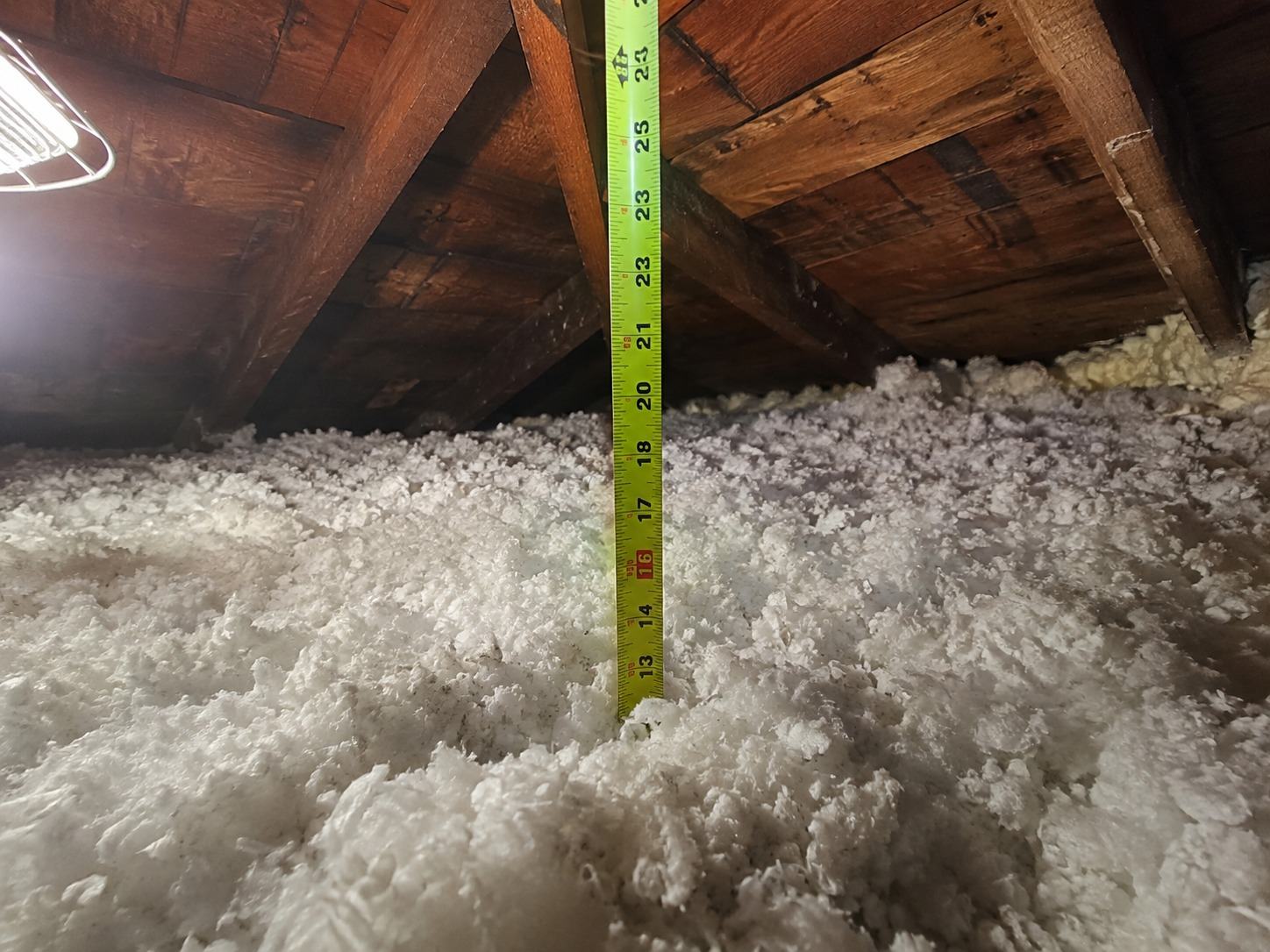
- The finished depth, with depth rulers left on the joists so you can check it yourself.
- Baffles at the eaves.
- What air sealing is included, and where.
- Whether anything has to be removed first, and why.
When to insulate an attic in Toronto
Spring and fall are the easiest seasons to work in a Toronto attic, but we can do the job any time of year. On a hot summer afternoon the attic gets hot enough that we start early. Winter work is fine because we work from inside the house, and it has one real advantage: ice dams and frost on the roof nails show us exactly where heat is getting out.
Step by step
How an attic insulation job goes in Toronto
We do every job in the same order, so the new insulation goes down on an attic floor that's already sealed and ventilated.
Attic inspection
We measure the depth that's there now, check for moisture and pests, and see how air moves through the soffit and roof vents.
Air sealing and prep
We seal penetrations, top plates and the hatch, then put in baffles so the soffit vents stay open.
Install and walk-through
The insulation goes in to the depth written on the quote. We clean up the floors and then show you the finished attic.
Service area
Attic insulation across Toronto neighbourhoods
We cover Leaside, Lawrence Park, Davisville, Moore Park, Summerhill, Rosedale, Forest Hill, Roselawn, The Danforth, Parkview Hill, Woodbine Heights, Victoria Village and Don Mills. The houses change from street to street, so we check each attic before saying what it needs.
Questions
Attic insulation questions from Toronto homeowners
It depends on the size of the attic, how much insulation is already up there, the material and the finished depth. Removing old insulation, air sealing and new baffles each add to the job when they're needed. We look at the attic first, then give you a written quote that lists each part separately so you can see what you're paying for.
Only if the old insulation is wet, mouldy, flattened or full of rodent droppings. Dry, even fibreglass or cellulose can stay where it is. Once the air leaks are sealed, the new blown-in insulation goes right on top. If the attic has vermiculite in it, we stop, leave it undisturbed, and recommend you have it tested by a qualified lab or abatement firm before any work goes ahead.
For an open attic floor, blown-in fibreglass or blown-in cellulose suits most Canadian houses. Loose fill spreads evenly over the ceiling joists and fills the gaps that batts leave around wiring and framing. Spray foam makes more sense for sloped ceilings, knee walls and spaces too tight for loose fill.
On a typical open attic floor, blown-in fibreglass works well and is what most people use. Mineral wool, which is what that brand makes, is denser and handles fire and moisture better. We'd use it in walls, around chimneys, and anywhere fire resistance matters most.
Closed-cell spray foam is the best choice for the underside of a roof deck, because one layer both seals the air and blocks moisture. Doing it that way brings the attic inside the heated part of the house, so the roof vents are closed on purpose. If the attic floor is open and the roof is vented, it's simpler to insulate the floor with blown-in insulation, and that works well.
No. The City of Toronto lists adding or replacing insulation as work that doesn't need a building permit. If you're planning other work in the house at the same time, check that with the City on its own.
Yes, if the attic is thin or leaky right now. Air sealing plus more insulation cuts the heat you lose through the ceiling. If there's already a deep, even layer up there, the change will be much smaller, and we'll tell you that. The upstairs rooms are usually where you notice it first.
Once it's cured, spray foam is inert and safe to live with. Nobody should be in the house while it's sprayed or during the cure time listed for the product. Before the job is booked, we tell you when you can go back in for the product we're using.

Next step
Book an attic insulation inspection in Toronto
Call us, or send the form with your address and whatever you've noticed upstairs. We'll look at the attic, tell you which of the four outcomes fits, and put the work in a written quote.