Attic Insulation in Scarborough, ON
We measure your attic, find where the air is leaking and quote only the work that will change something.

Scarborough is about 13 km from us. In any attic, we check the depth, the condition of the old layer and the air leaks first. Often that's air sealing and a top-up, not a full tear-out. If the insulation is wet or damaged, it has to come out first.
Scarborough's suburban houses
As the city spread outward, much of rural Scarborough was turned into suburban housing developments in the last third of the 20th century. That tells you roughly when a lot of streets were built. It tells you nothing about what's sitting in any particular attic now.
Insulation changes as a house ages. People add to it, electricians push it aside, stored boxes flatten it and roof leaks soak it. Two houses built the same year can look nothing alike above the ceiling.
So the age of your house doesn't change how we start. We measure the insulation depth in several places across the attic floor, not just at one spot by the hatch. Then we look for leaks: gaps around ceiling light boxes, plumbing stacks, wiring holes through the top plates and the edges of any dropped ceilings. In a fibreglass attic, dark dusty streaks usually show where warm air has been moving through. Depth tells us how much insulation you have. The leaks tell us whether it can actually do anything.
What we do in Scarborough attics
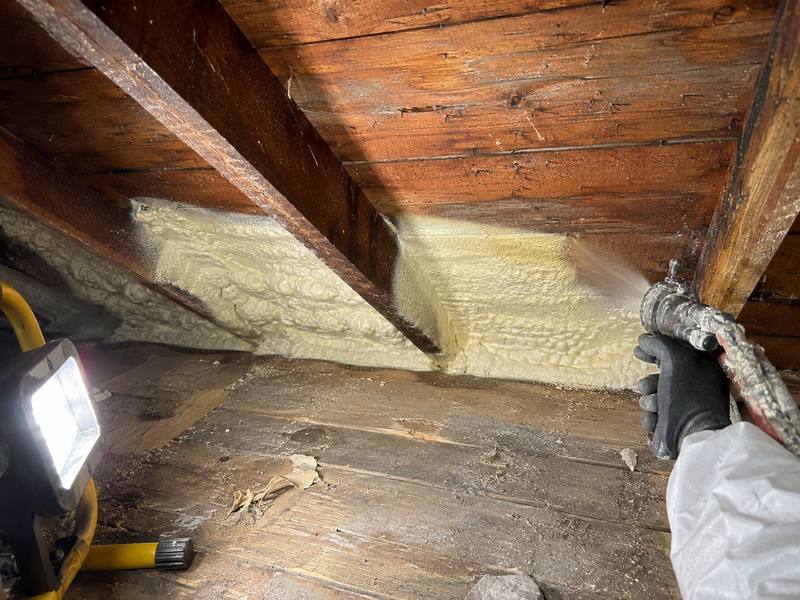
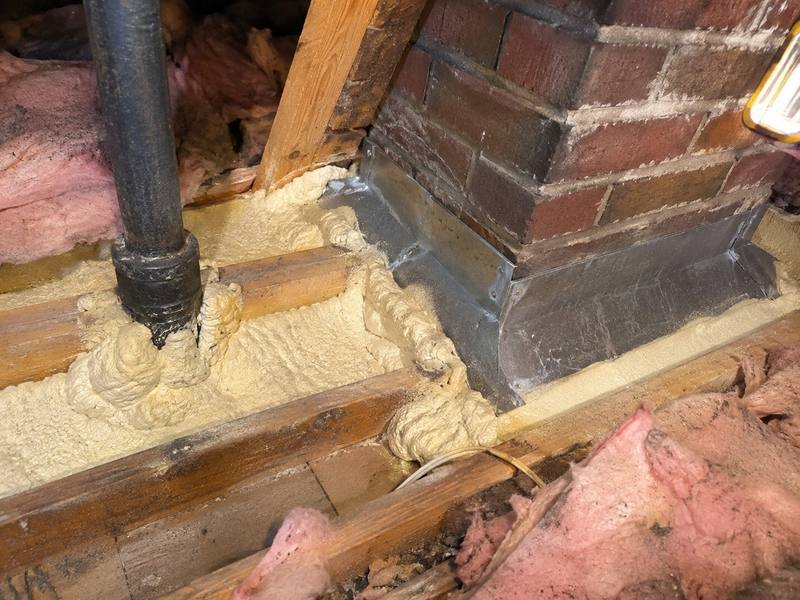
We start with air sealing. Spray foam, caulking and rigid board close the gaps between your heated rooms and the attic, so warm, moist air stops rising into the insulation. Insulation slows heat down, but it doesn't stop air from moving. An attic full of open bypasses keeps losing heat even under a thick layer.
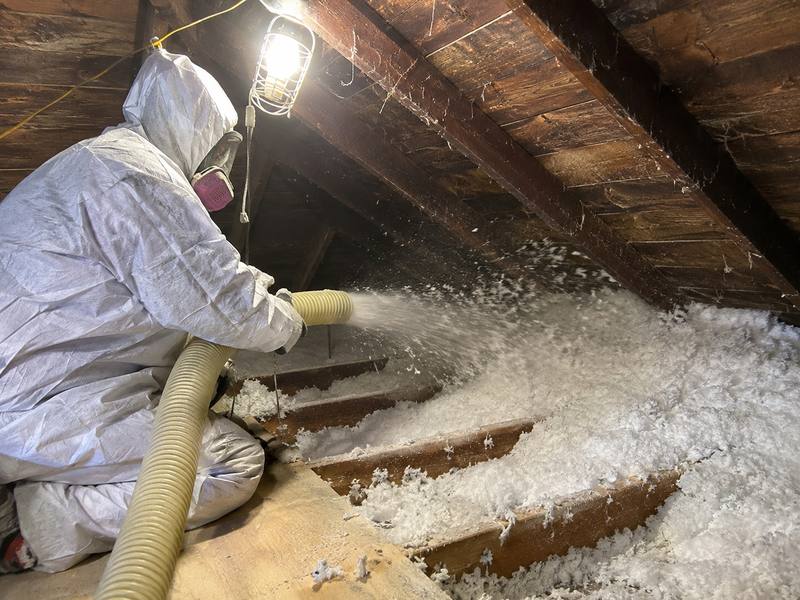
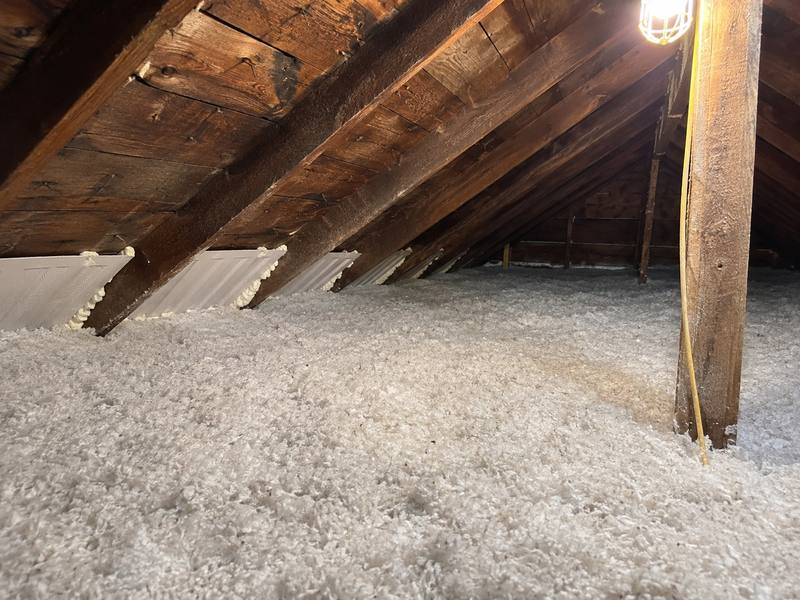
If the insulation you have is dry and just too thin, we put a blown-in insulation top-up over it. A blowing machine pushes loose-fill cellulose or fibreglass through a hose, and the installer spreads it to an even depth across the attic floor. It fills in around joists and wiring where batts leave gaps. If you have soffit vents, we put baffles in at the eaves first so the new layer can't choke off the airflow.
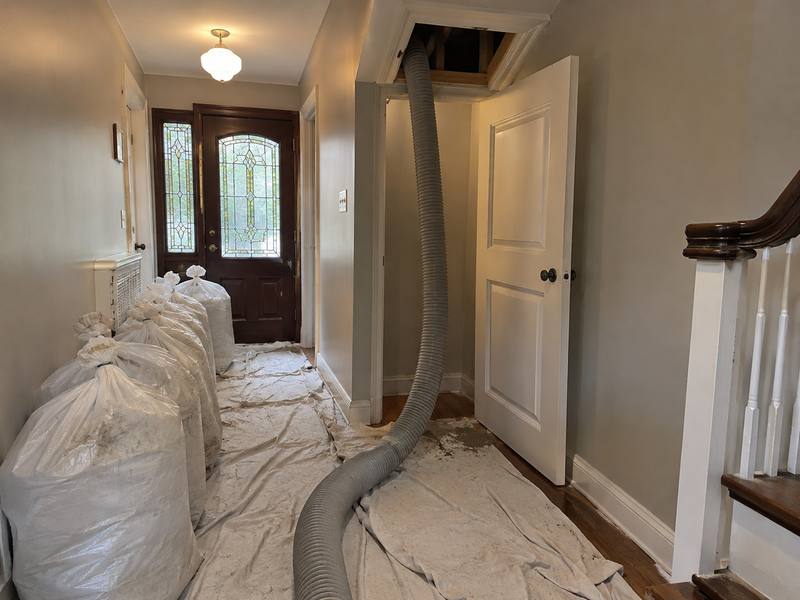
Insulation that's wet, mouldy or torn up by rodents comes out before anything new goes in. For attic insulation removal we use a high-powered vacuum that pulls the old material down a hose into bags outside. You're left with a bare attic floor, ready for sealing and fresh insulation.
When an attic insulation top-up is enough
A top-up is enough when the existing layer is dry, evenly spread and has no droppings in it, and the leaks underneath are sealed. Clean insulation that's just thin still works. Tearing it out would only add cost and mess.
Removal makes sense when the old material is holding water, smells of mould or has had animals nesting in it. Lay new insulation over a wet layer and you trap that moisture against the ceiling drywall and the framing.
If your attic is in good shape already, we'll say so.
How far we come
For Scarborough, your quote starts from your address. Tell us where the house is and what you've noticed, like a cold upstairs bedroom or frost on the underside of the roof boards, and we'll go into the attic with that in mind. If you want to know how we choose between sealing, topping up and removal, it's explained on the home page.
About Scarborough: Scarborough, ON on Wikipedia · Scarborough on Google Maps
FAQ
Insulation questions from Scarborough
Yes, we work on attics all over Scarborough. That includes air sealing, blown-in top-ups and removing old insulation that has got wet or damaged. We always start by measuring what's already up there and finding where air is getting into the attic, then quote only the work that will help that house.
No. A top-up is worth it when the existing insulation is dry and the air leaks below it are sealed first.
Wet insulation has to come out before new insulation goes in. Soaked fibreglass or cellulose stops insulating properly and can feed mould on the wood around it. Whatever let the water in needs fixing first too, by a roofer if it's a roof leak, or the new insulation will just get wet again.

Next step
Request an insulation visit in Scarborough
Call us, or send the form with your address and whatever you've noticed upstairs. We'll look at the attic, tell you which of the four outcomes fits, and put the work in a written quote.